Advanced Research in Inclusive Systems Design SSII25_26
Advanced Research in Inclusive Systems Design SSII25_26
Our Challenge
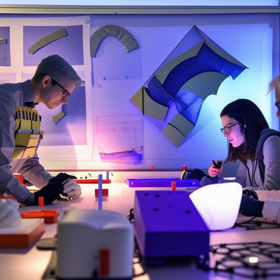
The ICT Cluster is tackling a pressing issue: how to create workplaces where neurodivergent professionals can thrive. Traditional recruitment practices, open‑space offices, and unspoken communication norms often create barriers — and modern technology has the potential to change that. The Advanced Research in Inclusive Systems Design program invites Doctoral Candidates to explore how emerging technologies can drive meaningful social impact. This international short‑term course is designed for researchers who want to combine scientific inquiry with design practice to develop solutions that genuinely improve the professional experiences of neurodivergent individuals. Participants will investigate how technologies such as XR, robotics, autonomous systems, wearable devices, and AI‑driven tools can be used to build more inclusive, user‑centered, and sustainable systems. They will design advanced system concepts, identify research gaps, select appropriate validation methods, and critically evaluate existing solutions in terms of accessibility, usability, and societal value.
The Team
Teachers
These are the teachers you'll work with on the challenge.
Learners
Challenge providers

- Study period
- 25 May – 30 June 2026
- Study format
- Blended
- Application period
- 5 April – 4 May 2026
- Credits
- 3 ECTS
- Hosting university
- Lodz University of Technology
- Topics
- Learner type
- Students
- EQF Level
PhD Level
Information
Value and progress
Advanced problem solving with universal design and accessibility.
Learner is able to identify, formulate and solve complex engineering problems by applying advanced principles of universal design and technological accessibility.
ESCO SKILLS
Communicating effectively for diverse audiences.
Learner is able to communicate effectively with a range of audiences.
ESCO SKILLS
Designing sustainable, human-centred engineering solutions.
Learner is able to apply sustainable engineering design to produce solutions that meet specific needs with consideration to human, cultural and environmental factors.
ESCO SKILLS
Prototyping and usability evaluation in the provider’s context.
Learner is able to build low and high-fidelity prototypes and design research methodology to assess their usability in the challenge provider's context.
ESCO SKILLS
Providing leadership and collaborate in multinational, inclusive teams.
Learner is able to work effectively in multinational team, create a collaborative and inclusive environment.
ESCO SKILLS
Reviewing data and advanced literature information for the challenge.
Learner is able to conduct literature review of existing advanced information systems and human-computer interfaces applicable to the challenge.
ESCO SKILLS
Not sure which competencies suit you?
Take our motivation scan to find learning opportunities that will help you reach your potential goal and growth.
Hosting university
Lodz University of Technology

Challenge provider
Associated Partner