
Rethinking civil preparedness
Rethinking civil preparedness
Our Challenge
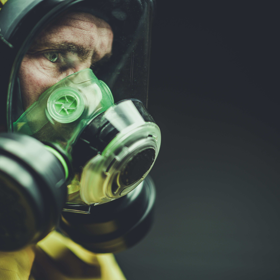
Across Europe, construction and infrastructure use large amounts of raw materials and generate more than a third of all waste in the EU. At the same time, societies are preparing for new investments in resilience, civil preparedness and protected infrastructure. In this challenge, you will explore how shelters, protected environments and preparedness infrastructure can be designed with sustainability, circularity and innovation at the core. Together with Swedish Civil Defence and Resilience Agency (MCF), the Swedish government authority responsible for coordinating crisis preparedness, civil defence and the protection of vital societal functions, you will investigate how future preparedness systems could make better use of reused materials, modular design, local production, repairability and circular resource flows. This is not only about recycling existing materials. It is about rethinking how preparedness infrastructure is designed from the beginning: how materials are sourced, how components are maintained, how systems can adapt over time, and how protection and sustainability can strengthen each other. Could a protected space also become part of a circular building system? Could materials from demolition, industrial by-flows or existing buildings become strategic resources for resilience? In this challenge, you will develop ideas that help shape preparedness solutions for societies that need to be both safer and more sustainable.
The Team
Teachers
These are the teachers you'll work with on the challenge.
Learners
Challenge providers

- Study period
- 3 September – 21 December 2026
- Study format
- Online
- Application period
- 9 July – 27 August 2026
- Credits
- 8 ECTS
- Hosting university
- Linkoping University
- Topics
- Learner type
- Students
- EQF Level
Bachelor Level
Information
Value and progress
Problem formulation and solving
After the completion of the course, the student should be able to work in a challenge-based way in a group and identify a relevant challenge from a broader abstract problem context, investigate opportunities through guiding questions, and thereafter develop and communicate a value-creating solution
ESCO SKILLS
Innovation processes
After the completion of the course, the student should be able to understand and use innovation processes – from challenge to solution – and have insight into how value and impact are created from a business, sustainability, and ethical perspective
ESCO SKILLS
Communication and presentation
After the completion of the course, the student should be able to communicate innovative solutions in the form of oral professional pitches as well as in writing in report form.
ESCO SKILLS
Reflection on learning process
After completion of the course, the student should be able to discuss and reflect, individually and in groups, on group processes and group dynamics in value-creating innovation processes where individuals from different professions collaborate interdisciplinarily
ESCO SKILLS
Not sure which competencies suit you?
Take our motivation scan to find learning opportunities that will help you reach your potential goal and growth.
Hosting university
Linkoping University

Challenge provider