
Make rail freight green everywhere
Make rail freight green everywhere
Our Challenge
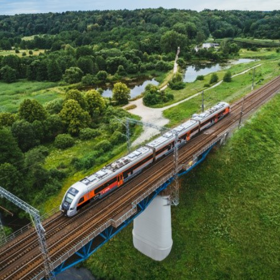
Rail freight is at a crossroads in the quest to reduce CO2 emissions. While the electrification of railway lines and the use of electric goods vehicles have been the go-to solutions, they fall short in non-mainline railways, particularly in freight train shunting at stations and on access roads where diesel traction still dominates. This limitation presents a unique challenge, especially in areas where electrification is impractical due to the small number of transported loads, unreasonably large investments in catenary network infrastructure, or due to the danger posed by the catenary network, especially where loading works are carried out (cranes, metal structures, warehouses, etc.). This is an opportunity to engage in a real-world problem, contributing to a greener future in freight transport. What if we could apply the innovative solutions used in passenger train traffic, like battery, hybrid (diesel + electricity/battery), or hydrogen-powered vehicles, to freight transport in these non-electrified areas? This is the challenge we pose to you. What would be the optimal solution, a technological/energy alternative in terms of railway lines, shunting works at stations or access roads, and cargo companies that also aim to reduce CO2 emissions and use sustainable technologies?
The Team
Teachers
These are the teachers you'll work with on the challenge.
Learners
Challenge providers

- Study period
- 4 March – 3 June 2024
- Study format
- Online
- Application period
- 6 January – 25 February 2024
- Credits
- 6 ECTS
- Hosting university
- Kaunas University of Technology
- Topics
- EQF Level
Master Level
Information
Value and progress
Pinpoint research direction
Self-sufficiently pinpoint a unique and impactful research direction, utilizing existing knowledge and acquired competencies.
ESCO SKILLS
Tackle real-world issues
Innovatively tackle complex real-world issues using the core tenets of challenge-based learning methodology.
ESCO SKILLS
Utilise teamwork and leadership principles
Utilise effective teamwork and leadership principles while collaborating within diverse, interdisciplinary teams.
ESCO SKILLS
Create and present ideas and prototypes
Create and effectively present innovative ideas and developed prototypes tailored to the requirements of unique audience.
ESCO SKILLS
Not sure which competencies suit you?
Take our motivation scan to find learning opportunities that will help you reach your potential goal and growth.
Hosting university
Kaunas University of Technology
Challenge provider